The power to create lasting change begins by trusting communities to lead.
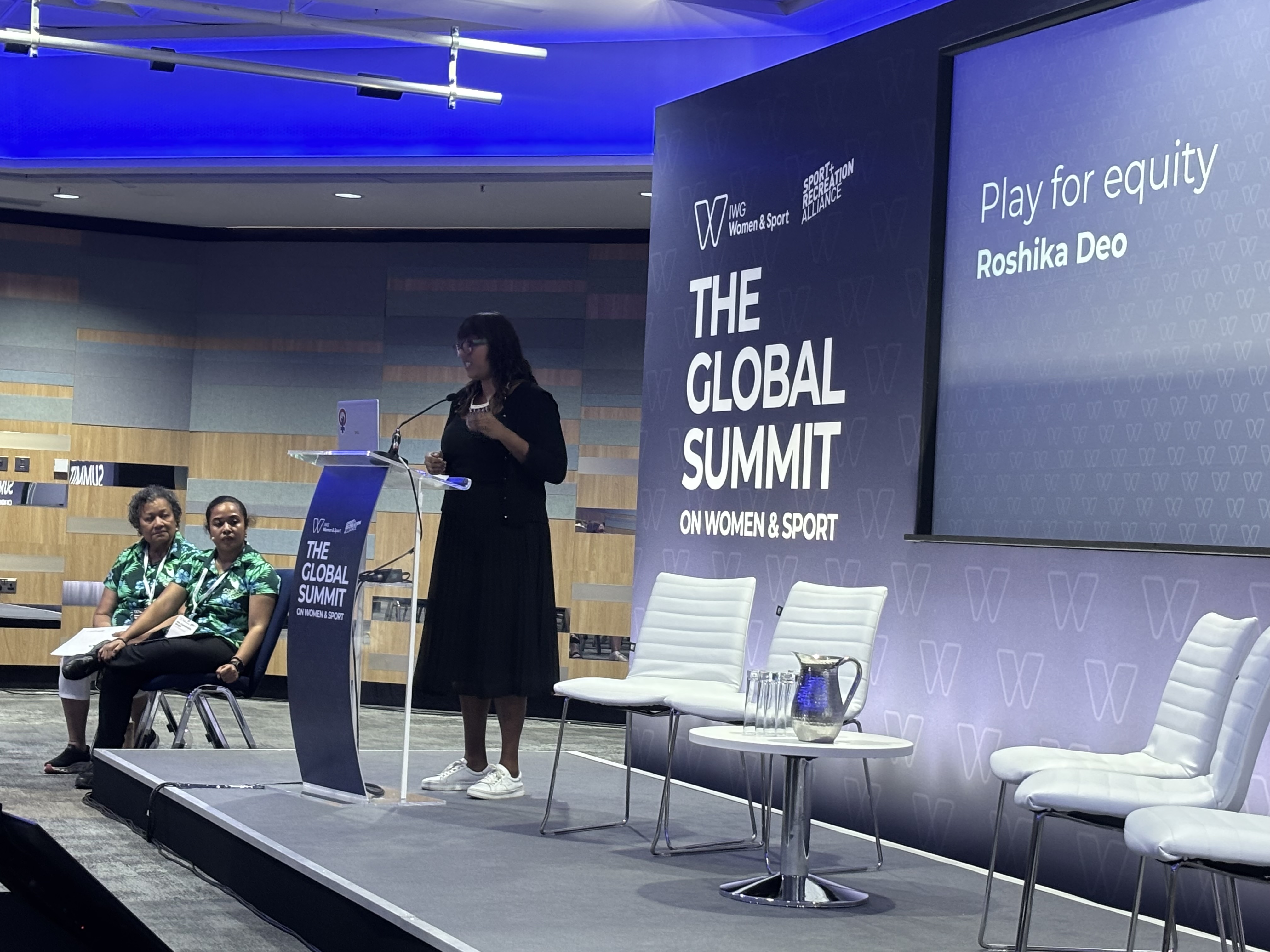
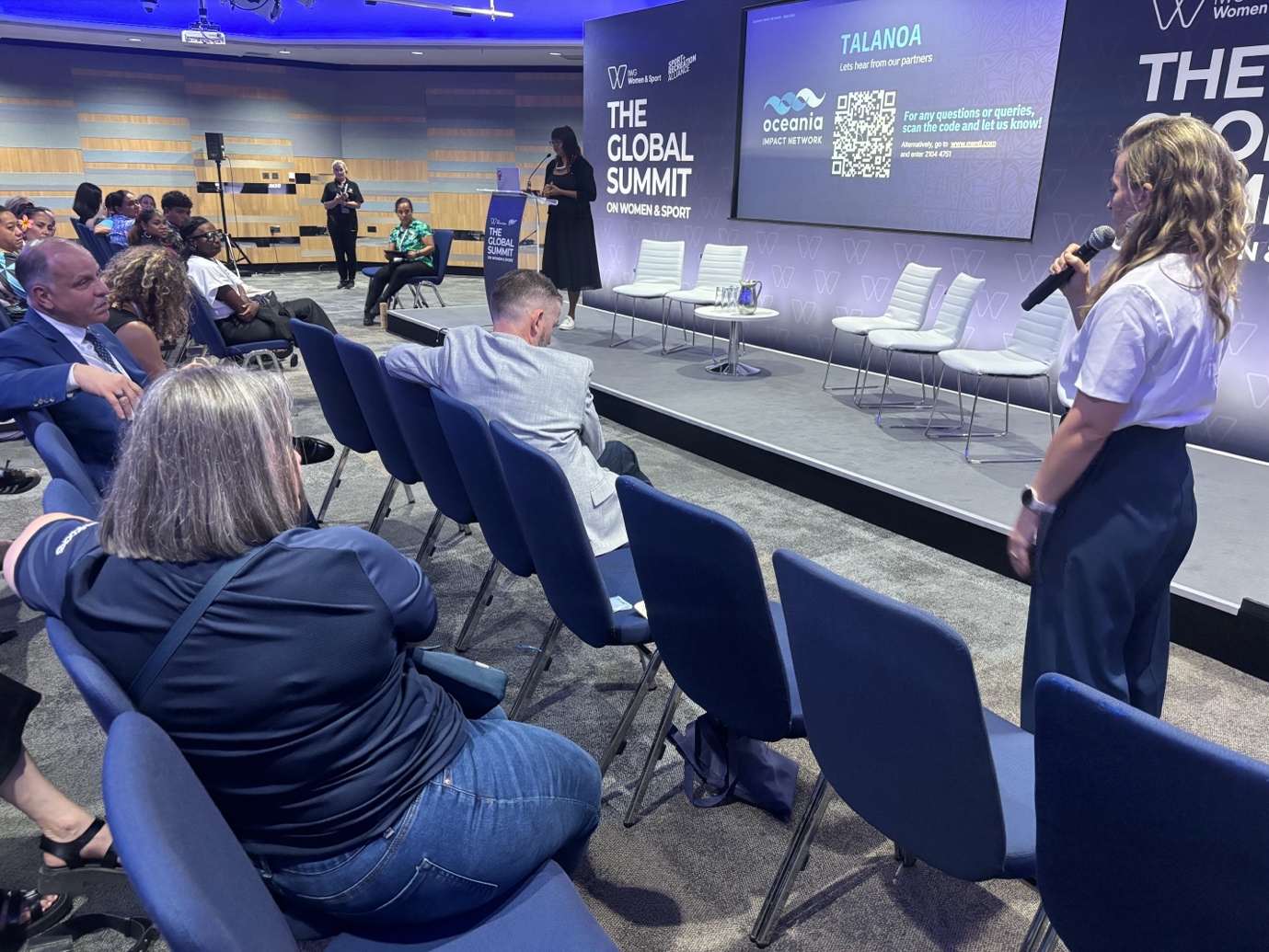
That was the central message delivered by Roshika Deo, Team Up GEDSI and Safeguarding Advisor and Oceania Impact Network (OIN) Governance Team member, during the Oceania Impact Network's featured SHIFT Session, "The Oceania Impact Network: Proof That Another Way is Possible," at the International Working Group (IWG) Global Summit on Women and Sport in Birmingham.
Opening the session's Stories from the Heart of Lived Impact segment, Deo reflected on the journey that began at the 2022 IWG Global Summit, where Team Up launched the Play for Equity initiative - a bold experiment in feminist participatory grantmaking that challenged traditional funding models by placing decision-making power directly into the hands of Pacific communities.
"Four years ago, we came to IWG with a commitment to shift power," Deo said.
"We wanted to test a different way of funding—one where unrestricted resources reached community initiatives, and where Pacific people themselves determined what solutions would be supported."
She recalled the memorable "podium pitch" at the 2022 Summit, where shortlisted Pacific grantees presented their ideas directly to delegates, who listened, asked questions and became part of a process built on participation rather than prescription.
Deo said the initiative emerged in response to the realities facing Pacific communities.
"Our region continues to experience some of the highest rates of gender-based violence in the world. Many children experience violence at home, and factors such as disability, gender, sexual orientation, age, ethnicity and geography continue to determine who gets to participate in sport, who feels safe, and who has a voice."
"Those realities demanded more than new funding. They demanded a new way of working."
Over the past four years, the Play for Equity programme has evolved into one of the flagship initiatives of the Oceania Impact Network, supported through a growing partnership between Team Up, the International Olympic Committee, UN Women and regional organisations committed to advancing gender equality, disability inclusion and safe sport.
Since its launch in 2022, the programme has delivered significant impact across Oceania:
• Four rounds of participatory grantmaking have been completed, with a fifth currently underway.
• Eighty-seven grants have been awarded across the Pacific.
• Sixteen individual grants have directly supported young women, persons with disabilities and people of diverse sexual orientations, gender identities and expressions (PIDSOGIESC).
• Additional investment through the International Olympic Committee has expanded the programme's reach and impact.
Deo highlighted that the programme's greatest innovation lies not simply in who receives funding, but in who makes the funding decisions.
Design and selection committees are intentionally made up of Pacific Islanders, including representatives from the very communities the grants seek to support, ensuring that lived experience not external assumptions guides every stage of the process.
She explained that each grantmaking cycle has become an opportunity to continuously learn, adapt and improve.
"This has meant being willing to decolonise grantmaking," she said.
"We've simplified reporting requirements, accepted video applications to improve accessibility, introduced minimum funding allocations for disability and PIDOSOGIESC-led initiatives, and made funding available to individuals and unregistered community groups who have traditionally been excluded from funding opportunities."
These changes reflect the Oceania Impact Network's broader commitment to challenging conventional development practice by placing trust, relationships and community leadership at the centre of investment.
Jurgita Serekaite, UN Women member and Oceania Impact Network Governance Team member, said the significance of the initiative extends well beyond individual grant projects.
"What makes the Oceania Impact Network so powerful is that it doesn't stop at individual projects. The evidence and lessons emerging from initiatives like the Play for Equity Fund are informing broader national strategies to prevent violence against women and girls."
She said sport has become one of the Pacific's most powerful platforms for advancing gender equality and preventing violence.
"Sport is not separate from our prevention agenda; it is one of the most powerful platforms we have to challenge harmful gender norms and create lasting social change."
Serekaite said the success of the Oceania Impact Network demonstrates the value of genuine partnership across sectors.
"The strength of the Oceania Impact Network lies in recognising that no single organisation can achieve this alone. By understanding and respecting each partner's comparative strengths, we bring complementary expertise from sport, gender equality, disability inclusion, safeguarding and community leadership to comprehensively address violence in and through sport across the Pacific."
Inoke Bainimarama, Executive Director of the Oceania National Olympic Committees (ONOC) and a member of the Oceania Impact Network Governance Team, said the Play for Equity journey demonstrates what becomes possible when communities are trusted to lead and institutions are prepared to share power.
"The Play for Equity Fund has shown that lasting change happens when we move beyond funding projects and begin investing in people, relationships and community leadership. The Pacific is demonstrating that another way is possible—one that is grounded in trust, inclusion and shared decision-making."
Bainimarama said the Olympic Movement has an important role to play in championing this approach across Oceania.
"For the Olympic Movement, this is about more than increasing participation. It is about building sporting systems where safety, inclusion and gender equality become the standard, not the exception. Through the Oceania Impact Network, governments, development partners, National Olympic Committees, international organisations and communities are working together around a shared vision because no single organisation can achieve this transformation alone."
Following the presentations, delegates viewed the Play for Equity documentary, showcasing the stories of Pacific communities transforming lives through sport, before participating in an interactive Talanoa exploring how governments, sporting organisations, development partners and communities can shift decision-making closer to those most affected and build more equitable approaches to investment.
The Oceania Impact Network's SHIFT Session formed part of the 2026 IWG Global Summit on Women and Sport and showcased Oceania as a global leader in participatory grant-making, feminist leadership and cross-sector collaboration.
Participants left with practical ideas and renewed commitment to strengthen partnerships, embed community leadership and create sporting systems where safety, inclusion and gender equality are not aspirations but the accepted standard across the Pacific.